
Why Cloud Modernization Requires a Customer-Centric, Outcome-Led Approach, Not Just Updated Infrastructure

Look beneath the glossy PowerPoints and the breathless "digital transformation" announcements, and you'll find something unsettling: enterprises moving workloads to the cloud without fundamentally changing how they operate, make decisions, or serve customers.
C-suites are approving millions in cloud migration spending while refusing to address the organizational debt and process friction that's been accumulating for decades. It's like installing a Ferrari engine in a car with square wheels and expecting to win races.

Yet a significant portion of these cloud initiatives fail to deliver their promised value. Not because the technology doesn't work, but because the surrounding strategy is shallow, siloed, or simply nonexistent.
Moving your infrastructure from on-prem to cloud isn't modernization. It's relocation.
Real cloud modernization goes beyond infrastructure to reimagine your entire operating model. But few executives have the stomach for that conversation.
Strategic Guide to On-Premises to Cloud Deployment – [ Download Now ]The Alarming Gap Between Cloud Adoption and Value Creation
Your cloud is only as good as what you do with it.
We’ve seen this play out across industries. A major insurance provider spent $50M on a comprehensive AWS migration, then wondered why their customer experience metrics hadn't budged. Their modernization was all server room and no customer room.
Contrast this with a strategic approach: when Xerago helped a leading insurance provider enhance customer retention, they didn't just implement cloud technology for its own sake.
They used cloud-based predictive analytics to identify customers likely to churn and create proactive retention strategies. The cloud wasn't the goal—it was the enabler for solving an actual business problem.
Banking is particularly guilty here. A tier-one bank shifted 80% of its infrastructure to cloud, only to layer the same byzantine approval workflows and risk-averse operational procedures on top.
Their cloud modernization framework looked impressive on paper but hadn't changed how quickly they could launch new products or personalize customer journeys.
The disconnect comes from treating cloud modernization as a technology exercise rather than a business reinvention opportunity. Your architecture may be distributed, but your thinking remains dangerously centralized.Unless your cloud architecture is purposefully reengineered to break silos and foster cross-functional collaboration, you're just moving complexity around.
Consider this:
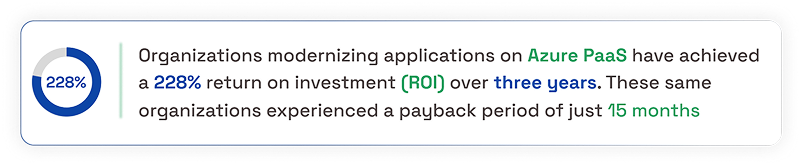
Yet many enterprises still can't directly connect their cloud investments to revenue growth or customer retention
The sad truth is that these organizations are paying premium cloud prices for the same mediocre outcomes they had before.
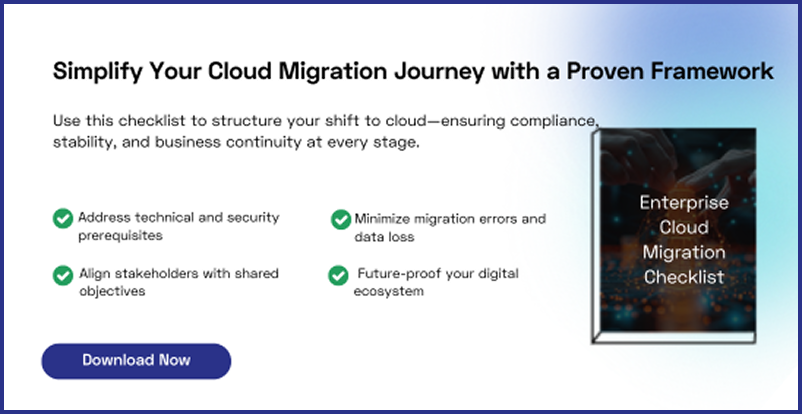
What is cloud modernization, really?
It's the opportunity to fundamentally rewire how your enterprise creates, captures, and delivers value. Anything less is just expensive.
Beyond Technology: The Missing Strategic Link
Here's the hard truth most cloud vendors won't tell you: The technology is the easy part.
The difficult part? Prioritizing what actually matters. And having the courage to say no to everything else.
A retail client I worked with had 18 different "high-priority" cloud initiatives running simultaneously. Cloud modernization software provides the technical foundation for this transformation, but without proper outcome mapping, even the most advanced solutions become underutilized investments. Each had its executive sponsor. Each had its dedicated team. Each was critical and couldn't possibly be deprioritized. When we mapped them against customer journeys and revenue impact, only three were moving needles that mattered.
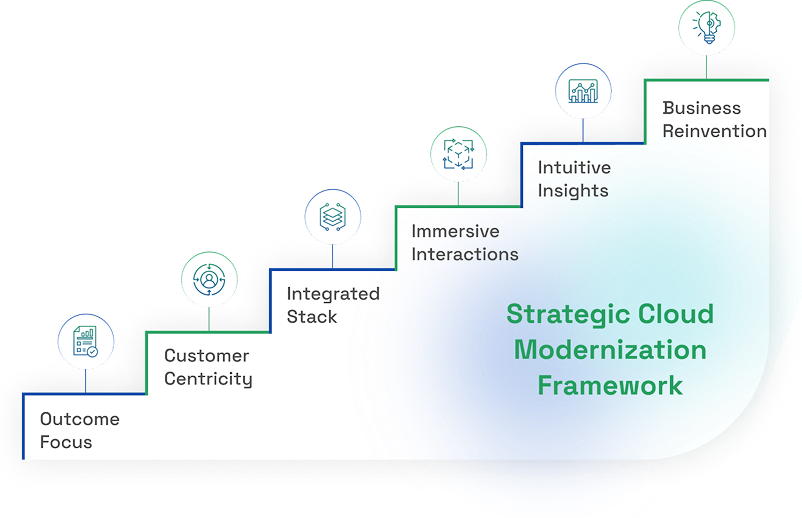
This brings us to the concept of "Outcome Focus" – one of the six drivers in Xerago's Digital Impact framework. Every cloud modernization investment must be mapped to a specific business outcome. Not "increased agility" or other fluffy metrics, but concrete revenue targets, retention improvements, or cost reductions.

Without this discipline, cloud modernization becomes a costly digital facade – impressive from the outside, hollow within.
The healthcare industry provides a stark illustration. A major provider spent millions on cloud modernization solutions without first understanding the bottlenecks in their patient experience.
Comprehensive On-Prem to Cloud Roadmap – [ Download the Guide Now ]Their systems became more modern while their patient journeys remained frustratingly archaic. The reason? They never aligned their cloud strategy with their customer experience strategy.
Cloud modernization means nothing if it doesn't change what your customers feel, experience, and value.
And that brings us to the uncomfortable question no one's asking: What if your cloud strategy is actually amplifying your organizational dysfunctions rather than solving them?
When Cloud Amplifies Dysfunction (And How to Prevent It)
Cloud doesn't fix broken organizations. It accelerates them – in whatever direction they were already headed.
The dirty secret of cloud modernization and migration initiatives is that they often make dysfunctional organizations more dysfunctional, just faster and at greater scale.
Take the telecommunications giant that moved to cloud infrastructure while maintaining 27 separate customer databases. Pre-cloud, their fragmented view of customers created confusion and friction. Post-cloud? The same problems existed, but they could now create that confusion with greater speed and at lower infrastructure cost. Progress?
Even the most sophisticated cloud modernization tools cannot fix fundamentally flawed organizational structures or processes—they must be deployed as part of a holistic transformation.
What they needed wasn't better cloud architecture but "Integrated Stack" thinking – another crucial element from the Digital Impact framework. This principle enforces a rationalized, interoperable technology environment that breaks down silos and creates coherent customer experiences.
I've seen cloud modernization go spectacularly right when it begins with business capability mapping rather than infrastructure planning.
Consider how Xerago helped a leading bank enhance customer engagement through an Event-Based Marketing Framework. Instead of simply migrating systems to the cloud, they reimagined how the bank could respond to customer behaviors in real-time.
By aligning cloud technology with customer journeys, they achieved:
- 2.3x improvement in conversion rates
- 1.55x revenue impact
Their cloud architecture followed their customer architecture, not the other way around.
The cloud modernization benefits they experienced went far beyond infrastructure savings. Their entire organization became more responsive, customer-focused, and digitally coherent. That’s what happens when you blend centralized cloud power with real-time edge intelligence.
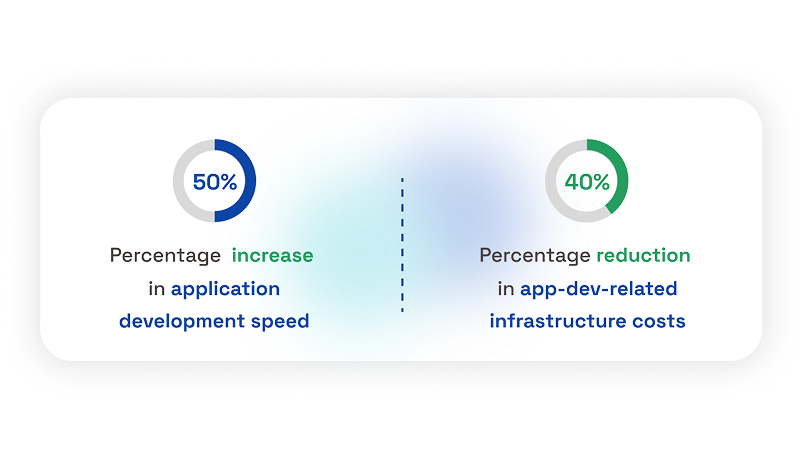
Enterprises using cloud modernization strategies report significant advantages:
But these benefits often come with integration challenges after cloud adoption. That's because most migration efforts focus on the technology stack without addressing the organizational and process stacks above them.
Cloud modernization isn't just an IT initiative. It's a whole-company reimagining. Treat it as anything less, and you're building impressive technology plumbing that connects to outdated business fixtures.
From ‘Cloud First' to 'Customer First': The Mindset Shift
Stop trying to be cloud-first. Start being customer-first. Let the cloud decisions follow.
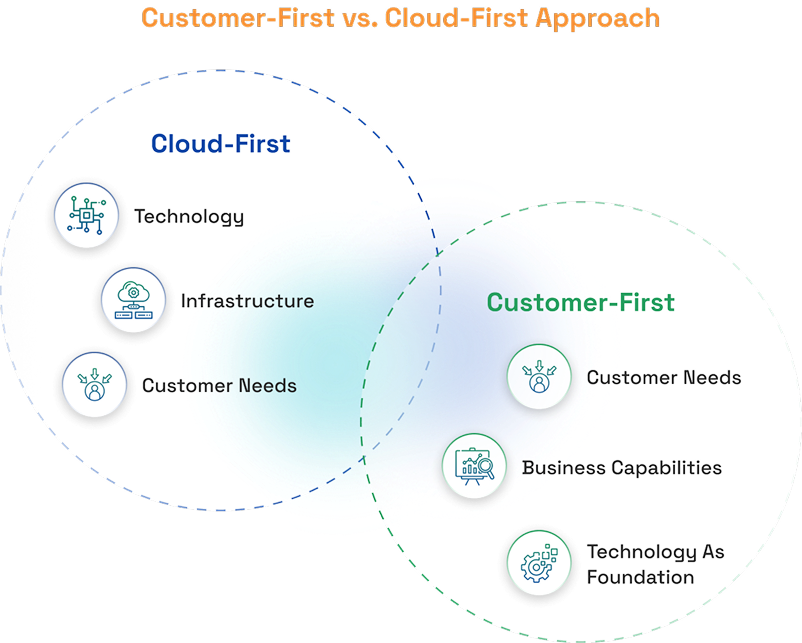
The most successful cloud modernization strategies I've encountered share a common trait: they're obsessively focused on customer experience, not technology elegance. They embrace what Xerago calls "Customer Centricity" – designing from the outside-in rather than the inside-out.
This was exemplified in their work with an insurance provider where cloud-enabled predictive analytics weren't deployed as a technical showcase, but as a way to identify at-risk customers and drive retention through personalized interventions. The technology served the customer strategy, not vice versa.
A financial services firm struggling with digital onboarding took this approach. Instead of migrating existing systems, they mapped every customer friction point, emotional response, and interaction need. Only then did they architect their cloud environment.

The result was impressive:
- Substantial reduction in onboarding abandonment
- Cloud footprint 40% smaller than initially proposed
That's the counterintuitive truth of effective cloud modernization: When you focus ruthlessly on customer outcomes, your technology requirements often become simpler, not more complex.
Most cloud modernization meaning gets lost in technical debates about containers, serverless architectures, and multi-cloud strategies. These discussions matter, but they're secondary to the fundamental question: "How will this make our customers' lives better?"
For the banking sector, this means moving beyond thinking of cloud as an IT cost-saving measure. It means leveraging cloud capabilities to create:
- Real-time personalization
- Instant lending decisions
- Seamless cross-channel experiences
One challenger bank built their entire cloud strategy around a single metric: reducing the time between customer intention and completed action. Everything else was secondary.
Enterprises using cloud modernization strategies report a 50% increase in application development speed – a critical advantage when consumers now expect near-instant resolution of their needs across digital channels.
Traditional enterprises cannot meet these expectations without true cloud modernization – not just of their infrastructure, but of their entire operating model.
The organizations winning in their sectors have recognized that cloud isn't about technology migration. It's about business model modernization with technology as the enabler.
Is your cloud strategy driven by IT efficiency or customer obsession? Your answer reveals whether you're building for the future or simply redecorating the past.
Enterprise On-Prem to Cloud Deployment Guide – [ Download Now ]The Path Forward: Strategic Questions Before Technology Answers
If your cloud modernization roadmap doesn't make some people uncomfortable, it's probably not transformative enough.
Real cloud transformation forces hard conversations about organizational priorities, sacred cows, and entrenched ways of working. It demands clarity about what you will and won't do.
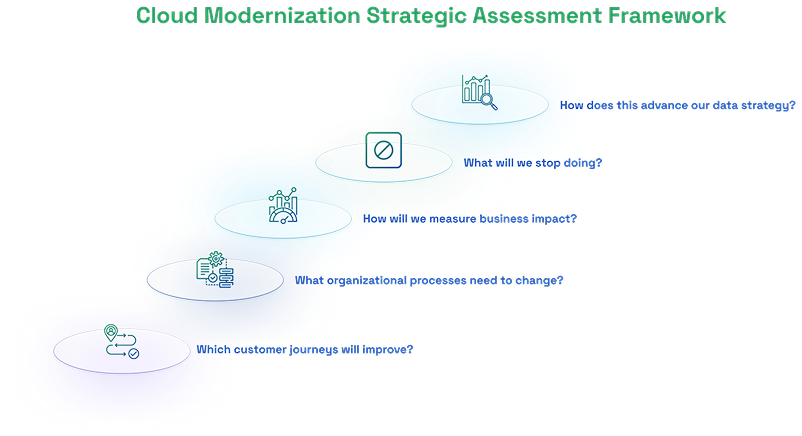
Before approving another cloud initiative, executives should demand answers to these questions:
- Which specific customer journeys will this improve, and by what measurable amount?
- What organizational processes need to change to fully leverage these cloud capabilities?
- How will we measure the business impact (not just the technical success) of this initiative?
- What will we stop doing or investing in to make room for this priority?
- How does this advance our data strategy, not just our infrastructure strategy?
A comprehensive cloud modernization strategy answers these questions while aligning technical capabilities with business priorities.
Too many cloud modernization frameworks focus on technology implementation while ignoring these strategic prerequisites. They treat adoption as success rather than outcomes as success.
When telco companies approach cloud modernization, they often focus narrowly on infrastructure cost reduction. The winners, however, use cloud capabilities to create what Xerago's framework calls "Immersive Interactions" – coherent, intuitive experiences that reduce drop-offs and increase engagement. This is where true differentiation happens.
A major retail bank implemented a comprehensive cloud data platform but initially failed to change how they used customer data in their marketing and service processes. The technology was modern; the practices remained antiquated.
Only when they revamped their organization around "Intuitive Insights" did their cloud investment begin delivering tangible customer outcomes. This approach involves:
- Knowing what data to capture
- Understanding how to process it
- Learning how to activate it effectively
Enterprises report that organizational change management, not technology implementation, is consistently their biggest cloud modernization challenge.
Cloud as Catalyst, Not Destination
Cloud modernization isn't the goal. It's the catalyst for the goal.
The true objective isn't to be "on the cloud" but to become the kind of organization that can rapidly sense and respond to changing customer needs, market conditions, and competitive threats.
Cloud provides the technical foundation – but only if coupled with:
- Strategic clarity
- Organizational agility
- Customer obsession
For many enterprises, hybrid cloud modernization offers the optimal balance between innovation and pragmatism, allowing organizations to transform at a pace that matches their cultural readiness.
The cloud modernization leaders I respect don't talk endlessly about their cloud architecture. They talk about the customer problems they're solving and the business outcomes they're driving. The cloud is implied, not celebrated.
For enterprises truly committed to transformation, cloud modernization represents an unprecedented opportunity to break from legacy constraints – not just technical ones, but organizational and mental ones as well.
The question isn't whether you'll invest in cloud modernization software and tools. You will, or you'll become irrelevant. The real question is whether your cloud modernization strategy—be it fully cloud-native or hybrid cloud modernization—will serve as the catalyst for reinventing your entire approach to creating customer value
Tech stacks change. Customer expectations evolve. Competitive landscapes shift. But organizations that build their cloud strategy around delivering exceptional, personalized customer experiences will continue to thrive regardless of what comes next.
This is the promise of true cloud modernization – not just updated infrastructure, but a fundamentally more valuable enterprise.
So, which version of cloud modernization are you pursuing? The digital facade? Or the true business reinvention?
Your customers already know the answer.

Ashvini SK
Senior Content Writer
Xtelligence Inbox.
Your weekly dose of marketing smarts!